Will Amorim transform Manchester United, or will he need to adapt his style to fit the squad? – Jamie Jackson
The incoming manager, Rúben Amorim, favors a 3-4-3 formation, yet Manchester United’s current squad doesn’t naturally fit this setup. On Monday, Amorim will face his biggest challenge: rekindling United’s tradition of vibrant, attacking play—a legacy established by legends like Billy Meredith, George Best, Wayne Rooney, and Cristiano Ronaldo. Since Sir Alex Ferguson’s departure, United has mostly lacked this spark, aside from Ole Gunnar Solskjær’s fast-paced counterattacks. Managers like David Moyes, Louis van Gaal, José Mourinho, and Erik ten Hag struggled to deliver United’s hallmark excitement.



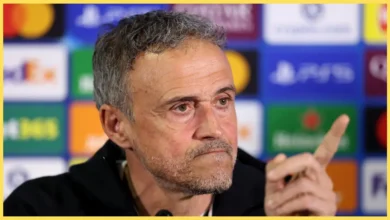
After Sporting’s 4-1 Champions League win against Manchester City, Amorim expressed that United shouldn’t play as defensively as Sporting, signaling his intent to create an exciting, attacking team. However, implementing this style with a squad in 13th place and players unfamiliar with his 3-4-3 formation will be a significant challenge. He admitted United “cannot be so defensive” as Sporting was against City, though Amorim himself often uses counterattacks against tougher opponents, raising questions about whether United will actually play more aggressively. The response of the Old Trafford crowd, which criticized Solskjær for defensive play, remains to be seen.
Building a team that thrills fans will depend on an inherited squad, unsuited to Amorim’s methods, until he can make his own signings. United’s abundance of central defenders means fielding a back-three lineup is feasible, likely with Lisandro Martínez, Matthijs de Ligt, and Leny Yoro (when fit). Amorim will have to assess whether they can execute his deep-build tactics.
For the midfield quartet, United’s wing-backs will face unfamiliar responsibilities. At Sporting, Amorim used pacey, inverted wing-backs like Geovany Quenda and Maximiliano Araújo. At United, Diogo Dalot and Noussair Mazraoui may be tried on either side, though both lack the pace typically needed for Amorim’s style. Amorim also contends with two injury-prone left-backs, Luke Shaw and Tyrell Malacia, and may consider Marcus Rashford or Alejandro Garnacho as wide options, though their defensive reliability is questionable. Antony might see an opportunity to revive his United career in this role, though it seems unlikely, and signing Quenda or Araújo in January could be difficult given budget constraints.
In central midfield, Amorim faces a tactical puzzle. A flat-four setup would mean squeezing in creative players like Kobbie Mainoo and Bruno Fernandes while excluding a dedicated holding player like Manuel Ugarte or Casemiro. Alternatively, a diamond formation could work, with Ugarte or Casemiro at the base, wing-backs on either side, and Fernandes or Mainoo at the top—yet this would mean one of the creative players would miss out, which conflicts with Amorim’s desire to avoid defensive play.
Selecting the front three is less complicated. Amorim could rotate Garnacho, Rashford, and Amad Diallo as wingers with Rasmus Højlund as center-forward. However, the team’s lack of goals—only nine in 10 Premier League games—demands urgent attention.
Top coaches prioritize adapting to the abilities of their existing players rather than enforcing a rigid system, a principle famously followed by Pep Guardiola. United is about to find out whether Amorim can match tha
t approach.